

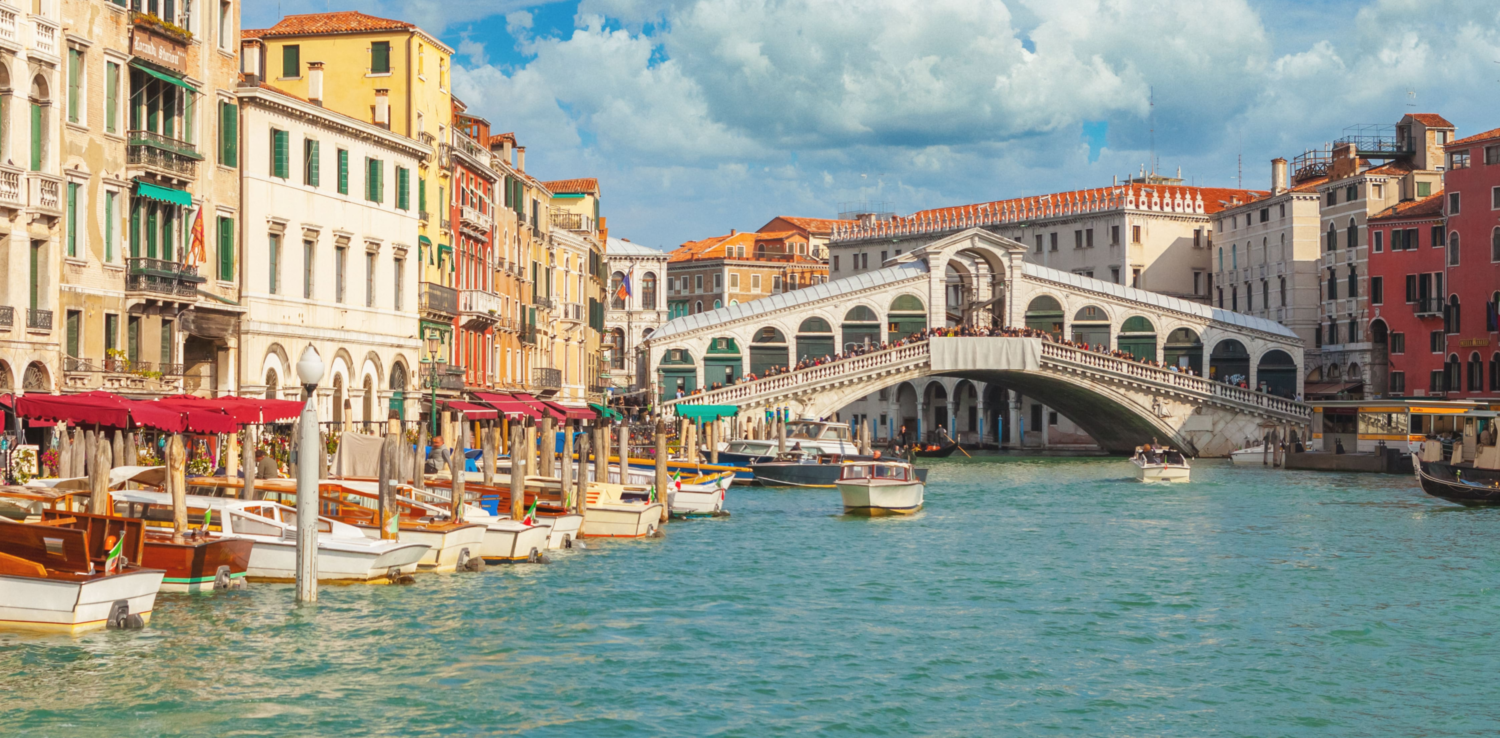
Venice – an amazing city that attracts millions of tourists from all over the world every year. The hallmark of Venice is that the entire city literally floats on water. In this article, we will look into how it is possible that the city remains on water. How are houses built in Venice, what do the houses stand on? And what secrets do the residents of this city adhere to? And most importantly - did they build the city on water, or was it flooded later!
The History of Venice - why Venice is built on water
Venice is located in the northern part of Italy. The climate of the city is very similar to that of Crimea, with hot summers and mild winters. The name comes from the Venetian tribe who lived in the Adriatic Sea area during the Roman Empire. Later, this territory was conquered by the Romans and named Aquileia.
According to historical data, the first settlements of Venice appeared in the 4th - 5th centuries. When the inhabitants of the province of Aquileia were seeking refuge from enemy attacks. Settling of the city began with small islands which later became part of the city.
Venice is situated on 117 islands. Each of these islands is unique in its own way.
How Houses Were Built in Venice
The city was already built on water. The inhabitants quickly adapted and constructed their homes in a special way so that they could stand directly on the water.
Throughout its history, the city has constantly been going under water. For this reason, its inhabitants have rebuilt it twice and moved to higher islands.
What Are Houses in Venice Built On

The stability of a building depends on its foundation, and the foundation on the soil beneath it. The city’s residents needed to find an optimal solution where the soil is used efficiently and not overloaded.
So, what do houses in Venice stand on? All of Venice is built on wooden piles, of which there are more than a million in the city. For the famous Rialto Bridge, more than 30,000 piles were used. Initially, this bridge was completely wooden but burned many times after which Venetians turned it into stone, a version that exists to this day.
Piles are special concrete, metal, or wooden beams widely used in construction to support structures. In the case of Venice, piles are primarily made of oak and larch. The choice of wood for the piles is not accidental; these trees meet the necessary strength levels, and are resistant to adverse weather and water. That is what Venice houses stand on.
Interesting fact - the piles in Venice do not rot or decay. This is due to the unique nature of the mud in the city, which tightly envelops the pile and does not allow oxygen to penetrate. Therefore, animals, insects, and water do not destroy the wood.
Where Did They Get the Wood From?
There are no forests in Venice, so wood was brought in from nearby countries. Mostly, the wood came from the mountainous regions of Slovenia and Croatia. Larch and oak piles were delivered to the city by boat, first navigating rivers and then the sea to Venice.
According to numerous data, wood was also supplied from other regions.
How Buildings Are Constructed, What Houses in Venice Stand On
- During construction, piles were buried more than 8 meters deep until the beam reached solid ground;
- Then, residents waited for the piles to petrify;
- The next step was to lay logs on top of the pile layer;
- Logs were laid in a cross-crossing manner;
- On top of the logs, a layer of marble or brick was laid.
This method provided buildings with special stability and distributed the weight of the entire structure evenly, not only in one place.
Interesting Facts about Venice

- Many think that boats navigate between islands randomly, but that's not entirely true. There are special water routes with two-way traffic in Venice. There are even poles indicating the boundaries of the water road;
- Residents continually build upwards and construct bridges near their houses to prevent flooding;
- Every year, the city sinks by 1 cm;
- On certain streets, tourists often walk barefoot to avoid getting their shoes wet;
- Officially, there are 485 gondoliers in Venice. Becoming a gondolier is nearly impossible as the profession is typically inherited;
- A gondola can accommodate 6 passengers and a gondolier. Each gondola costs approximately 50,000 euros. It is made of 9 types of wood and is specifically constructed for the gondolier;
- From the 18th century to today, the banks of the Grand Canal have remained nearly untouched. There are still large old buildings that have been turned into museums and exhibition halls;
- The Grand Canal is the main street in Venice, but you likely won't be able to walk on it. You can only navigate it by water tram, gondola, or taxi;
- The facades of large buildings, built by wealthy individuals, serve as the banks. One side faces the Grand Canal, the other faces the land.
- In Venice, there are many houses where the distance between them is only one meter. They face each other's windows directly, and since the windows are so close, one can greet a neighbor from the window with a handshake. That is how houses are built in Venice.
How Buildings Preservation
It's not accurate to say that all buildings are well-preserved, as most of them have tilted slightly. It can be noticed that the first meter of many houses lacks finishing. This is done to prevent the dampness of water from entering the house. In some buildings, water flows into the rooms. To prevent the rooms from becoming damp, the finishing is not done up to the floor. That is how houses are built in Venice.
Most shops build floors much higher than water level to avoid flooding and damaging goods.
In Venice, there are special water barriers attached to doors to prevent water from seeping in. Doors without barriers become very rusty and begin to develop holes.
Interestingly, Venice is not finished being built; many developers continually add homes.
Overall, Venice is a unique and unparalleled city. Only here have people managed to create a globally renowned historical masterpiece in incredibly challenging conditions. All tourists feel as if they have stepped back into the Middle Ages. For 15 centuries, this city remains the embodiment of the impossible. It not only stands alone against the tides but also copes with a large number of tourists every day! Visit Venice – everyone should experience it before it completely goes underwater!
Our contacts
Our managers are always ready to assist you in choosing a transfer and answering all your questions.